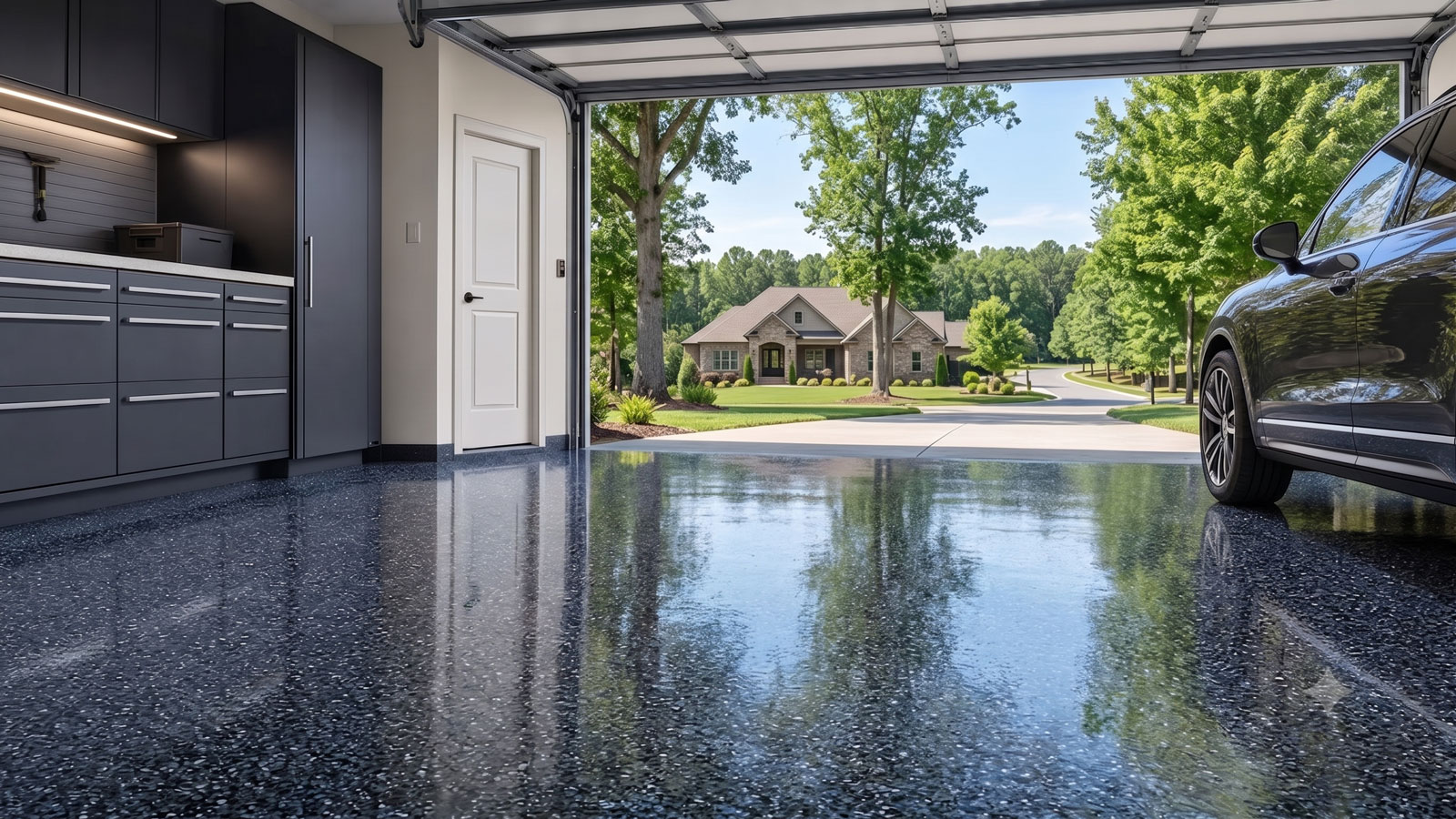
Garage Floor Coating in Rogers, AR
Garage floor coating options and preparation guidance for Rogers homeowners.
Floor Coating Considerations in Rogers, AR
Rogers combines a historic downtown street grid with later suburban neighborhoods and active reinvestment. Its July 2024 comprehensive plan explicitly calls for protecting established-neighborhood character while managing transitions to new development. This matters when evaluating a garage floor: an older house might contain a newer replacement slab, and a newer suburban garage can still have paint, moisture or curing-product residue. Neither address nor architectural style substitutes for looking closely at the concrete.
The same 2024 plan prioritizes the Beaver Lake watershed, creeks and wetlands, and the city adopted a detailed drainage criteria manual in July 2025. These are specific public planning concerns, not evidence that a particular residential garage floods. A coating project should separate normal vehicle-tracked water from drainage entering at a threshold or moisture moving through concrete. Surface preparation, not a 'waterproof' marketing phrase, determines what a floor system can reasonably accomplish.
Rogers' future-land-use placetypes distinguish downtown neighborhoods with interconnected blocks from suburban neighborhoods with curving streets and larger individual lots. That distinction can affect where grinding equipment is staged, whether a garage is integrated into the house, and how owners use the space. Compare epoxy, polyaspartic and decorative-flake systems only after identifying previous finishes, soundness, joints, accessibility and realistic time away from parking.
Local Project Insight
Rogers' 2024 comprehensive plan distinguishes traditional downtown neighborhoods from later suburban development, and its July 2025 drainage manual addresses watershed and floodplain management. These are reasons to evaluate garage access and actual moisture behavior separately—not to assume citywide conditions apply to every slab.
What Affects the Cost of Garage Floor Coating in Rogers?
Rogers' mix of older neighborhood garages and newer suburban layouts can produce different project scopes for the same floor area. Existing paint, working-garage contamination, edging, patching and observed water entry can all alter preparation costs.
A quote should distinguish verified work from contingencies. Ask what the contractor saw, what further inspection or surface grinding might reveal, and how any additional repairs would be authorized.
- Old finishes near established blocks: Where garages have served several generations of uses, previous paints, patches and contamination may add removal and profiling time. The citywide age of a neighborhood is a prompt to inspect, never a substitute for checking the floor.
- Suburban garage configuration: Rogers' plan describes curving suburban street layouts and generally larger lots. Attached multi-bay garages, steps and storage need measured edges and staging even when floor square footage appears straightforward.
- Runoff and threshold conditions: The city's 2025 drainage manual concerns public flood and runoff management. At a private garage, a downhill driveway, gutter outlet or visible waterline is what should trigger specific investigation before a coating.
- Cracks and sound concrete: Evaluate cracks, failed patches, pitting and joint movement during preparation. Some defects can be repaired with the coating scope, while evidence of active movement needs a separate opinion rather than a cosmetic cover.
- Coating-removal labor: Old sealers and failing decorative finishes can prevent reliable adhesion. Include mechanical surface profiling and debris removal in the written estimate rather than assuming the installer can coat over whatever is already present.
- Flake, traction and return time: The chosen flake blend, finish texture and topcoat affect both material and labor. A garage used daily for household parking requires clear cure instructions and realistic space for displaced vehicles.
Call for a clear, project-specific estimate — or request one online.
Rogers' Historic Blocks and Suburban Neighborhoods
The July 2024 Rogers comprehensive plan specifically differentiates downtown neighborhoods, with an interconnected grid and mixed architectural periods, from suburban neighborhoods built around larger lots and more curvilinear streets. The plan also calls for reinvestment and preservation of established neighborhoods. These descriptions explain why a garage near downtown may have a different layout or history from one in later western subdivisions, but they do not tell anyone when its concrete was poured.
For a garage in an older residential area, ask if its concrete was placed when the house was built, when the garage was added or when a later floor was replaced. Look for previous paints and patch edges, not just cracks visible from the doorway. A workshop with embedded oil or an old floor coating may need far more surface preparation than a floor of comparable size that has been kept bare.
Suburban garages present their own questions. A two-vehicle bay may have steps to the home, stored recreational gear, a floor drain or a large amount of edge treatment. A recently built property may retain curing compounds or construction residue. The surface condition and a manufacturer's preparation requirements should determine grinding and cleaning; 'new' should never mean that profiling is skipped.
Rogers homeowners should ask contractors to explain how their bids handle unknown prior coatings, crack movement, edge details and access for equipment. A bid that names those factors is easier to compare and less likely to substitute an attractive price for an incomplete preparation plan.
Beaver Lake Watershed Planning and Garage Water Exposure
Rogers' comprehensive plan identifies protection of Beaver Lake, waterways and green infrastructure as a local priority. Its July 2025 drainage criteria manual formalizes standards for managing runoff and floodplain-related conditions at a broader scale. Those citywide commitments provide relevant context, but a private slab must still be evaluated on its own evidence.
If a garage floor stays damp, distinguish rainwater entering from the driveway or door from moisture rising through concrete. The first may involve surface drainage or a threshold; the second can require appropriate moisture testing and product-specific evaluation. A floor coating does not resolve a bad gutter outlet, redirect runoff or guarantee resistance to pressure beneath a slab.
For garages without active water intrusion, water from washed vehicles, wet tires, boats, bicycles or lawn equipment can still affect traction and cleaning. A textured flake finish may be useful, but excessive texture can change how dirt is removed. Ask for a sample of the proposed finish and advice about routine cleaning after installation.
The correct sequence is to observe the actual wetting pattern, resolve active drainage faults, verify slab soundness, mechanically prepare the concrete and then choose a compatible system. That keeps the promise focused on cleanability and durability of a properly installed floor instead of claiming a coating is a flood-control measure.
Frequently Asked Questions
Does Rogers' Beaver Lake watershed planning mean my garage is moisture-prone?
No. The city plan addresses regional water resources and runoff. An individual garage needs its own inspection for water entry, slab moisture and drainage before a coating installer can judge suitability.
Will a garage downtown automatically need more work than one in a subdivision?
No. Neighborhood age and street layout do not prove slab age or defects. Inspect old paint, surface strength, crack repairs and past use in either location, then price the necessary preparation.
Can a decorative flake floor eliminate tracked-in dirt and water?
No. Vehicles and stored gear still carry water and grit inside. A properly installed finish may make cleanup easier, but owners should discuss topcoat texture and an appropriate cleaning routine.
Should every crack be covered during the coating job?
Cracks need evaluation. Some can be repaired with routine surface work, but ongoing movement or structural defects may require a different specialist. Do not assume a coating layer will arrest concrete movement.
How should I compare epoxy and polyaspartic bids in Rogers?
Compare the complete preparation and coating systems, not product labels alone. Ask for specified repairs, layer count, moisture limits, traction, edges, cure conditions and the date vehicles can return to the garage.
Rogers Neighborhoods & Local Context
Phone Quote Line
Discuss your project and get a realistic estimate range for the garage.
(479) 777-2577Typical Project Cost
$3,000–$5,500
Typical range for a two-car garage. Final pricing depends on floor size, concrete condition, preparation, coating type, and finish options.
Helpful Guides